
Bringing Clarity and Confidence to Student Financing for Peruvians Studying Abroad
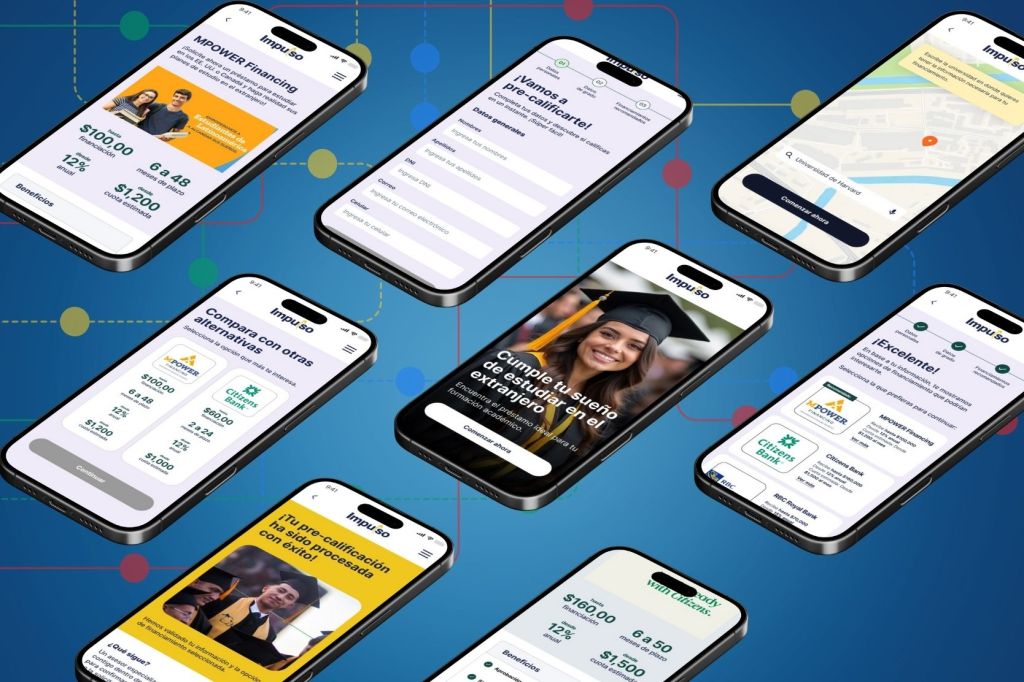
Impulso was a collaborative UX/UI project developed during a 4-month design bootcamp at Colectivo23. Our multidisciplinary team worked together throughout the full UX process. From defining the problem and conducting research to prototyping and testing. The goal was to design a trustworthy and accessible platform to help peruvian students secure financing for higher education abroad. Each team member contributed to all phases through distributed tasks, peer feedback, and strategic decision-making.
😟The Problem

🧩 The Current Landscape
Studying abroad is no longer just a dream, it’s a concrete goal for thousands of peruvian students who seek quality education and better career prospects. Yet for many Peruvians, accessing international academic programs comes with a high financial cost that often requires a student loan.
And that’s where the struggle begins.
The process of applying for student financing is long, confusing, and built for someone else — someone who speaks English fluently, who understands financial jargon, and who doesn’t need reassurance along the way. Most platforms are designed without any cultural or emotional connection to peruvian students. They offer little clarity, minimal guidance, and no real support.
The result? Disorientation. Frustration. Anxiety.
Beyond money, what these students truly lack is access — to clear information, to trustworthy platforms, and to a community where they can share questions, experiences, and progress without shame or fear.
It’s not just about affording education.
It’s about being seen, understood, and supported through one of the most important decisions of their lives.
🎯 Business & User Goal

Building a platform like Impulso was never just about launching another fintech product. It was about solving a systemic problem — one that sits at the intersection of access, trust, and education.
From a business standpoint, the goal was clear: create a digital experience that simplifies the student loan process for peruvians applicants and builds long-term credibility in an underserved market.
But that’s only half the story.
On the user side, the goal was more urgent, more emotional. Students needed to feel guided, not lost. Informed, not overwhelmed. Supported, not alone. The platform had to speak their language — literally and culturally — and walk with them step by step, from first doubt to final approval.
Trust had to be designed.
Clarity had to be intentional.
And confidence had to be earned.
That’s what Impulso set out to do.
🔍 Our Approach
Before jumping into design, we needed to understand one thing:
Why does the current system fail Latin American students so deeply?
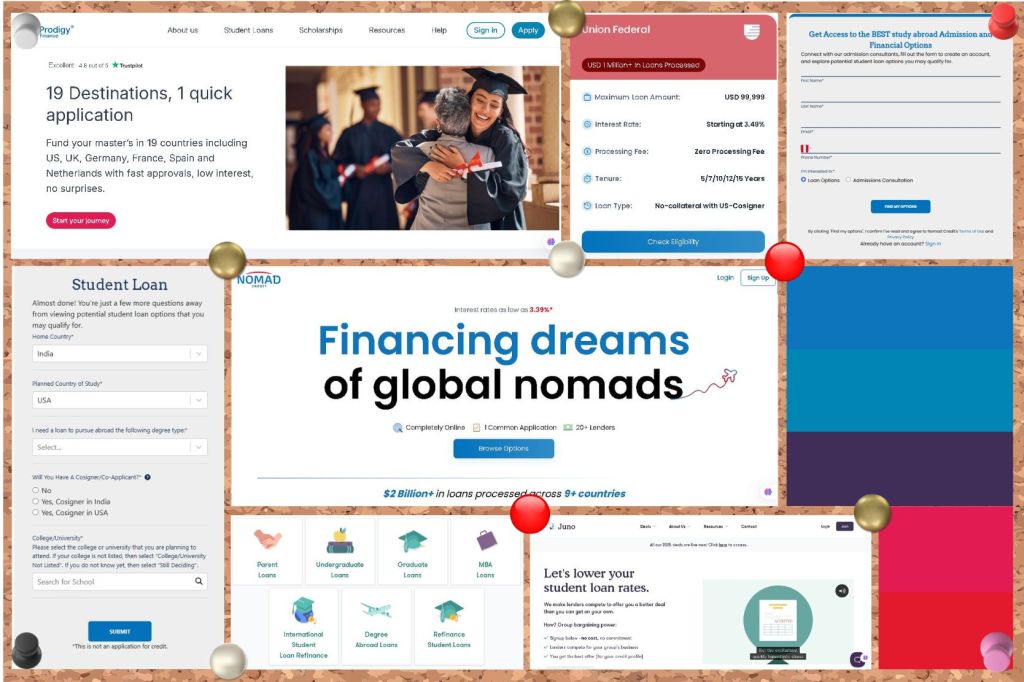
We started by analyzing existing platforms like Prodigy Finance, Juno, and Nomad Credit. These competitors offered valid technical solutions — but most operated in English, with dense, impersonal interfaces and little cultural awareness. There was no clear step-by-step support, and almost no emotional connection.
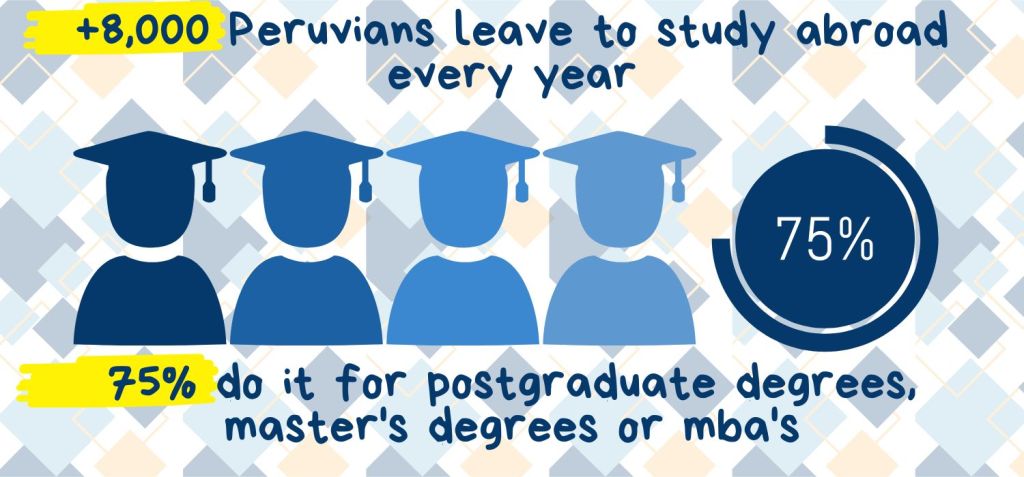
As part of our desk research, we came across a number that really caught our attention — and confirmed that we were heading in the right direction. Every year, over 8,000 young Peruvians leave the country to pursue studies abroad. Even more telling: 75% of them are doing it for postgraduate programs, master’s degrees or MBAs. These aren’t just statistics — they represent people who are dreaming big, investing heavily, and navigating an exhausting process without the support they deserve. This insight became a key turning point for us. It helped validate the need for a platform like Impulso, built to guide students through the chaos with clarity, trust and cultural empathy.
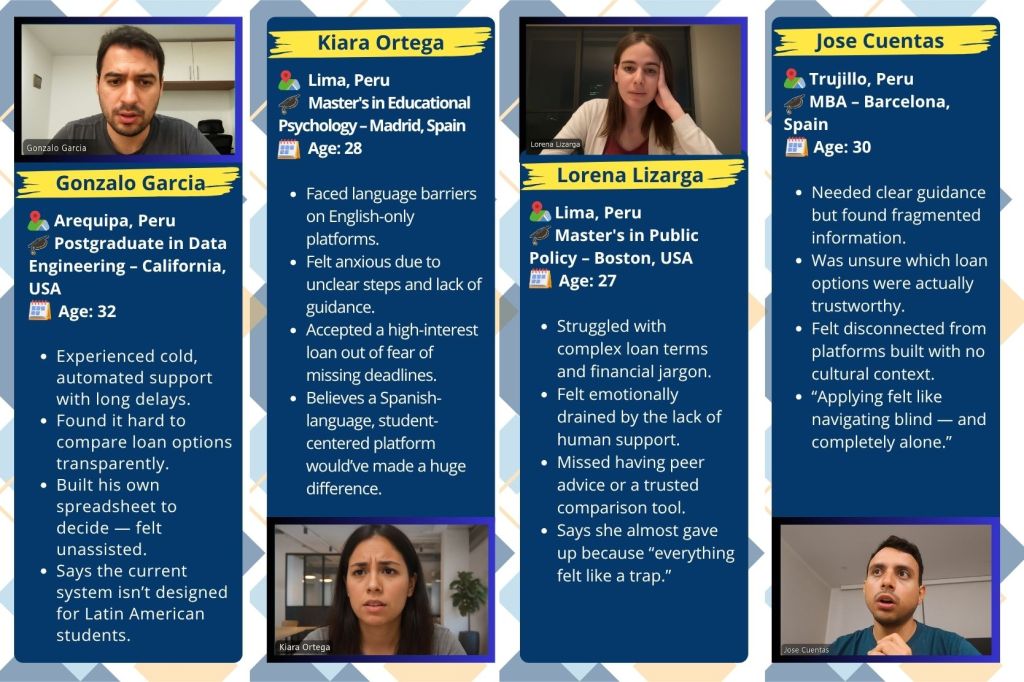
To better understand the real frustrations behind student financing, we conducted four in-depth interviews with Peruvian students who are either navigating or have already gone through the loan application process.
We spoke with Kiara, Gonzalo, Lorena, and Jose — all currently pursuing or preparing for graduate studies abroad. Each of them had faced, in different ways, the same common barriers: confusing platforms, unclear steps, distant service, and a complete lack of support in their native language.
The interviews were held virtually via Zoom, and we followed a pre-defined guide of open-ended questions. But more than ticking boxes, we focused on creating space for them to share freely — their doubts, frustrations, and emotional toll.
We also asked them what they wished existed.
Their answers were honest, raw, and incredibly valuable.
From those conversations, it became even clearer:
This wasn’t just about access to loans.
It was about feeling guided, understood, and respected along the way.
Students spoke of confusion, fear of scams, lack of transparency, and total disconnection from the services meant to support them. They didn’t just want a loan — they needed guidance, clarity, and a space to feel safe asking questions.
The research made one thing clear:
If we wanted to build trust, the platform couldn’t just work — it had to care.
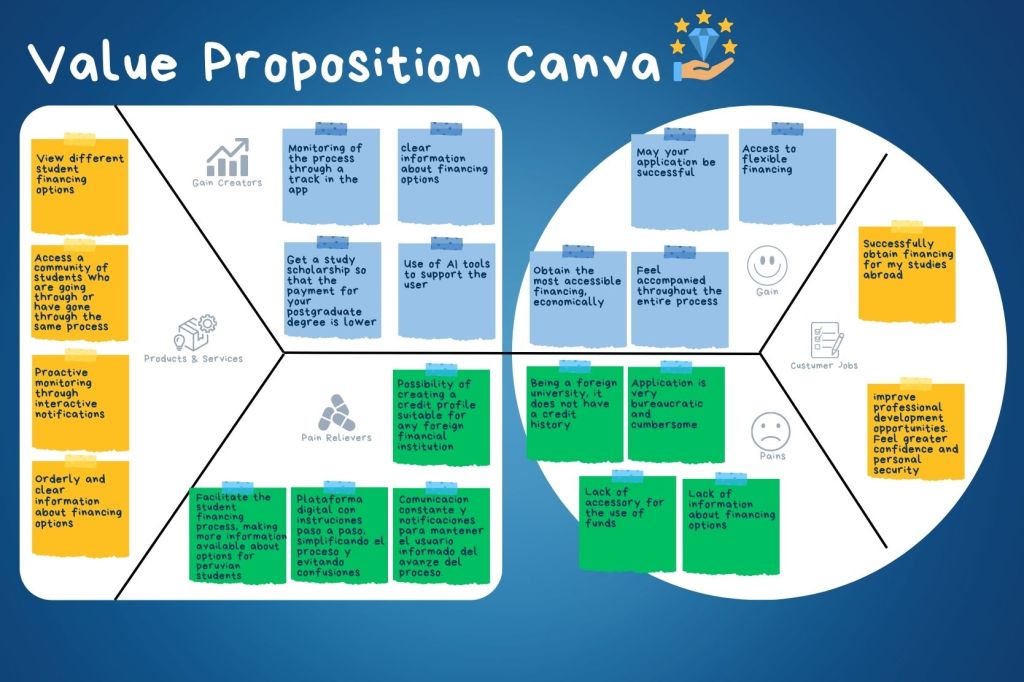
🙋♂️ Meet Carlos
To better understand the students we wanted to help, we started by listening. We ran desk research, analyzed online forums, explored competitors, and conducted in-depth interviews with four Peruvian students who had gone through or were actively navigating the student loan process. That’s where Carlos came to life. Not as a fictional character, but as a reflection of the many voices we heard.
Carlos is 28, lives in Lima, and works full-time while studying in the evenings. He dreams of pursuing a master’s degree in Spain, not just to boost his career but to explore the world and challenge himself. But the moment he started looking into financing options, everything became blurry. Information was scattered, hard to trust, and almost always in English. He jumped from bank websites to agency chats to confusing application forms, feeling more overwhelmed at every step.
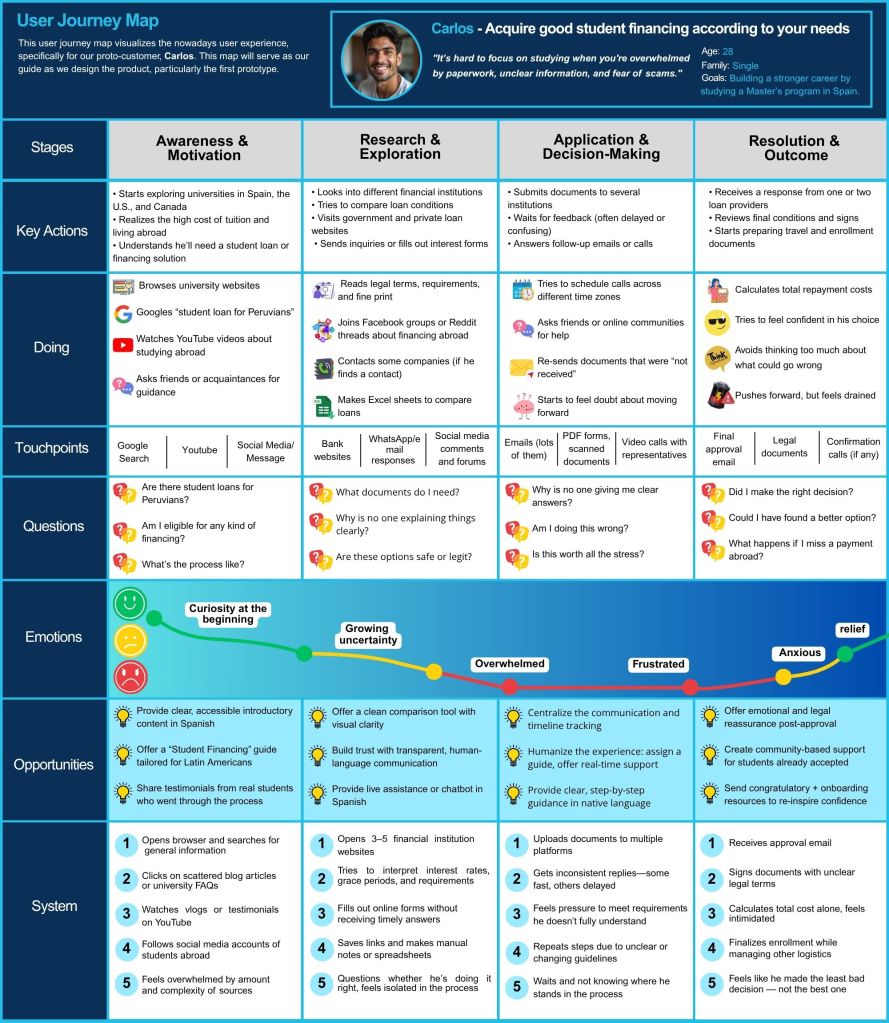
🧠 What we learned along the way
After weeks of research, interviews, and mapping the real journey of students like Carlos, it became clear that this is not just about applying for a loan — it’s about navigating a system that often feels confusing, cold, and full of barriers. Hearing their stories and frustrations helped us step into their shoes and understand what truly matters to them.
We walked away with a few powerful insights:
- They need clear and trustworthy information that can actually guide their decisions.
- They’re juggling jobs, studies, and deadlines — so they want simpler, faster, and less bureaucratic processes.
- Most importantly, they’re looking for a safe and supportive way to finance their dreams, but struggle to find platforms they can trust.
- And they’re craving a more human experience, where someone is actually there to guide them step by step. Not just a chatbot or a generic FAQ page.
These insights became our compass helping us shape a solution that’s not just functional, but human.
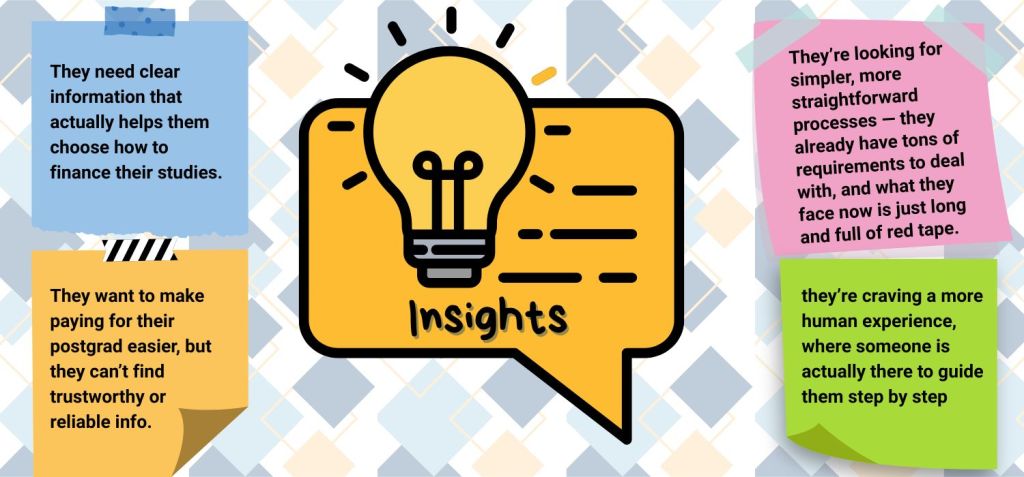
💭 Exploring Possible Solutions
After understanding the struggles of students like Carlos — the confusing information, endless paperwork, and lack of emotional support — we started imagining what a better experience could look like.
We explored different ways to tackle the key pain points:
- Centralize Information: A single platform where students can access and compare trusted loan options, all in their native language.
- Simplify the Process: Tools that break down complex steps into easy, guided actions — no more forms buried in PDFs or scattered links.
- Human-Centered Support: Real assistance throughout the journey, not just automated responses. We envisioned one-on-one guidance and community interaction.
- Emotional Relief: A space where students feel seen, heard, and not alone. We considered adding testimonials, live Q&As, and a visual roadmap to reduce anxiety.
These solution paths helped us move from frustration to clarity — and laid the foundation for what would become Impulso.
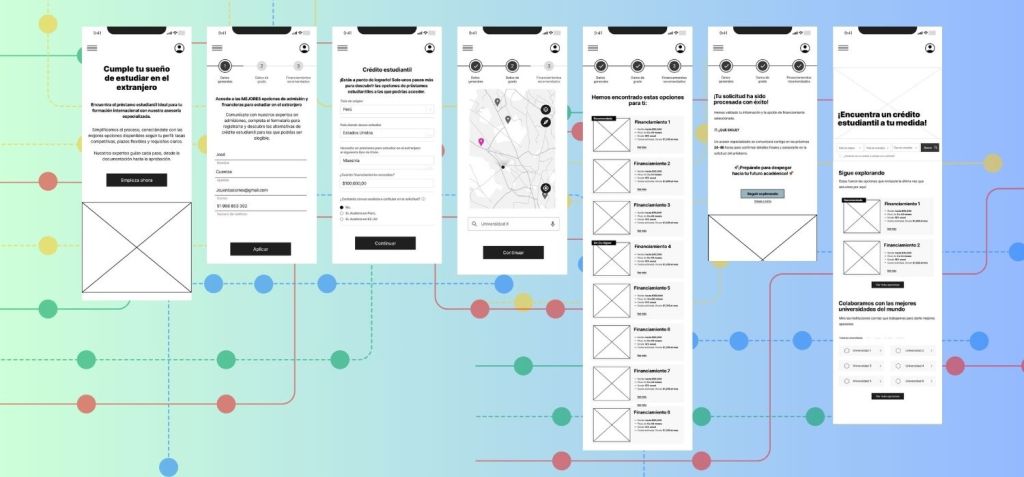
📝 From scattered ideas to structure: first sketches of Impulso
After immersing ourselves in interviews, research, and many (many!) sticky notes, it was finally time to bring all that insight to life. This is where the first wireframes of Impulso were born — simple, raw, but full of intention.
Our goal? Create an app that makes the student loan process feel less like a bureaucratic nightmare and more like a guided, supportive experience. These low-fidelity wireframes are our first visual attempt to map out that journey — one where students like Carlos won’t feel lost, ignored, or overwhelmed.
Every screen you’ll see here reflects what we heard from real people: they want clarity, they want guidance, and, most of all, they want to feel like someone is walking this path with them. This is our starting point. And while there’s still a long way to go, this is where Impulso began to take shape.
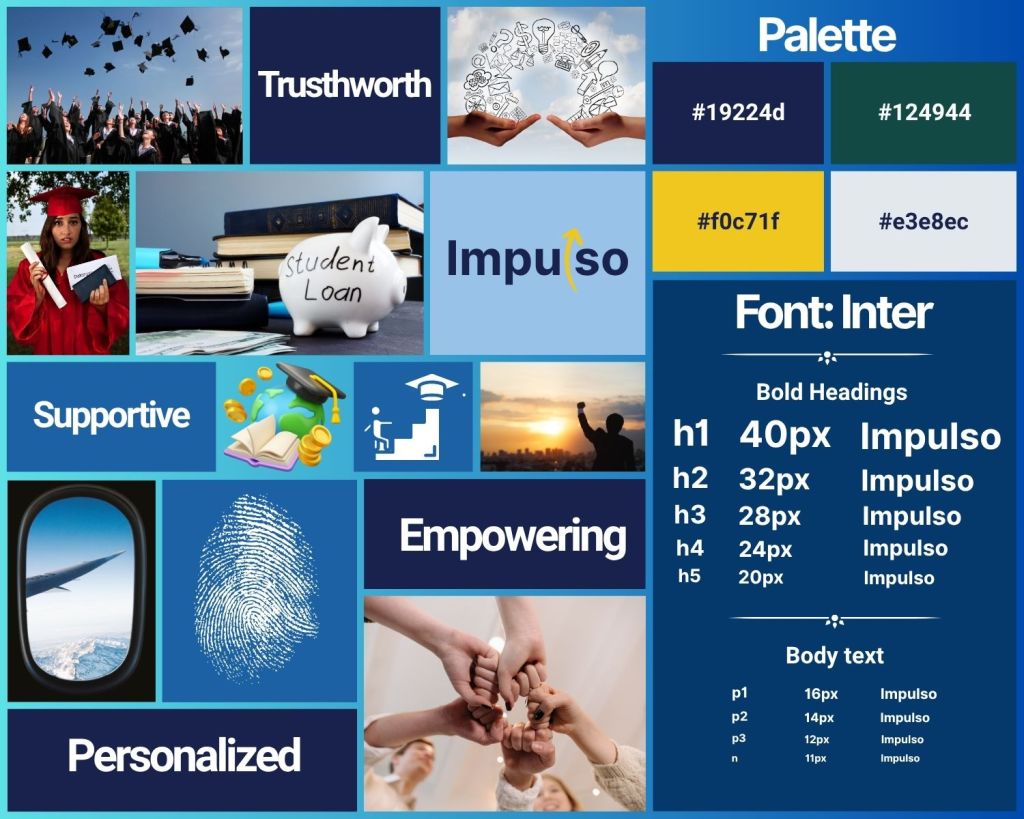
🎨 Defining Our Visual Identity: Colors, Logo & Style
Once the structure started taking shape, it was time to give Impulso a face — something that would feel warm, trustworthy, and fresh.
We wanted the visual identity to reflect the kind of support we wish every student could count on: calm, clear, and empowering.
We tested several directions, but kept coming back to the same core idea: confidence and guidance without the cold corporate look. The final brand style emerged from there — a clean, modern design with soft colors and simple shapes that feel friendly without losing credibility.
📱 High-Fidelity Prototype
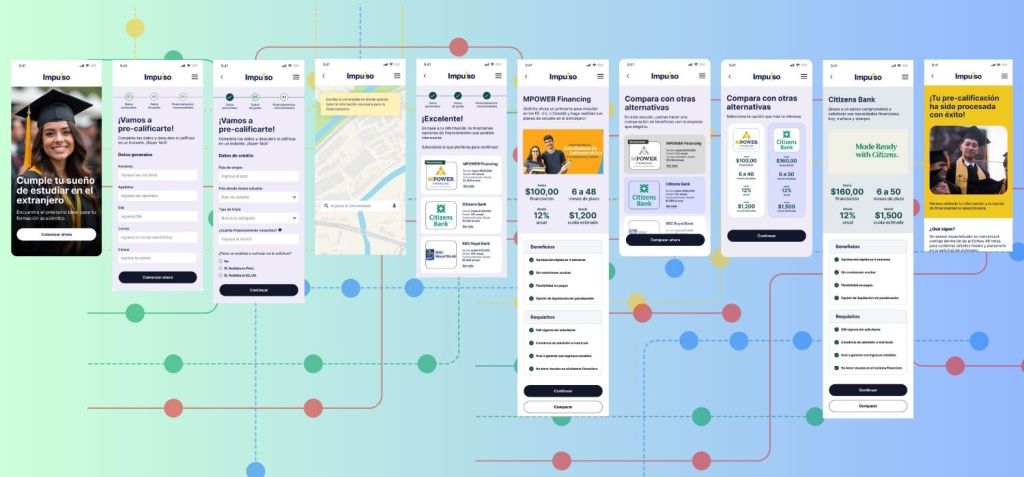
Given the short delivery timeline, our priority was to design and develop a Minimum Viable Product (MVP) that would capture the core value of Impulso. The goal was to focus on the most essential features — enough to provide a functional, reliable experience for students while allowing us to validate the concept in real scenarios.
This first version covers the fundamental flows: onboarding, loan pre-qualification, and comparison of financing options. By launching quickly, we aimed to collect real user feedback early on, so we could refine the experience and gradually introduce additional features in the future.
🔗 Explore the Prototype on Figma:
🚀 Conclusion
To validate our MVP, we ran a usability test with the same four participants we had interviewed earlier in the process — Lorena, José, Kiara, and Gonzalo. The goal was to see if they could successfully navigate the app and complete the key predefined tasks:
- Fill in personal details and the location abroad where they plan to study.
- Choose two suggested financing options to compare.
- Select the best option between the two.
- Request personalized advisory support to move forward with the process.
All four participants completed every task without major difficulties, which confirmed that our flows were intuitive and accessible.
Since this is still an MVP, there are features we plan to add in the future, such as:
- Login to track the process in real time.
- Community and forum for peer support.
- Partnership badges with financial institutions.
Although Impulso was developed as a fictional project for a bootcamp, we approached it with genuine dedication and aimed to deliver the best MVP possible within the available time. More importantly, Impulso has real potential in the market. There is currently no platform in Latin America offering this kind of personalized guidance for student loans. Financial institutions that provide educational loans are actively seeking partnerships where they can offer a commission for each signed loan contract — making this not only a socially valuable solution but also a viable business opportunity.
 Filipe Monnerat